
Following are some most common Muhuratas people look for:
\n- \n
- Shubh Muhurata for Marriage \n
- Shubh Muhurata for Namkaran \n
- Shubh Muhurat for Partnership \n
- Shubh Muhurata for starting a business \n
- Shubh Muhurata for purchasing machinery \n
- Shubh Muhurata for buying property \n
- Shubh Muhurata for selling property \n
- Shubh Muhurata for buying vehicle \n
- Shubh Muhurata for investing \n
- Shubh Muhurata for admission \n
- Shubh Muhurata for going for an interview \n
- Shubh Muhurat for meeting clients \n
- Shubh Muhurata for hiring \n
- Shubh Muhurata for applying visa \n
- Shubh Muhurata for travelling \n
- Shubh Muhurata for Griha Pravesh \n
- Shubh Muhurata for commencing construction \n
- Shubh Muhurat for filing legal case \n
- Shubh Muhurata for operation or starting a medicine \n
How to Calculate Muhurata?
\nAs per Hindu Panchang, one day is about 24 hours; consequently, approximately 30 different Muhuratas occur in 24 hours, each lasting about 48 minutes. In Panchang, annual auspicious and inauspicious Muhuratas are pre-calculated and, therefore, mentioned for easy reference.
\n30 Muhuratas in a Day:
\n| No | \nMuhurata | \nClass | \n
|---|---|---|
| 1 | \nRudra | \nInauspicious | \n
| 2 | \nAhi | \nInauspicious | \n
| 3 | \nMitra | \nAuspicious | \n
| 4 | \nPitra | \nInauspicious | \n
| 5 | \nVasu | \nAuspicious | \n
| 6 | \nVaraha | \nAuspicious | \n
| 7 | \nVishwadeva | \nAuspicious | \n
| 8 | \nVidhi | \n\nAuspicious (Not if fall on Monday & Friday) | \n
| 9 | \nSutamukhi | \nAuspicious | \n
| 10 | \nPuruhut | \nInauspicious | \n
| 11 | \nVahini | \nInauspicious | \n
| 12 | \nNaktanakara | \nInauspicious | \n
| 13 | \nVarun | \nAuspicious | \n
| 14 | \nAryaman | \n\nAuspicious (Not if fall on Sunday) | \n
| 15 | \nBhaga | \nInauspicious | \n
| 16 | \nGirish | \nInauspicious | \n
| 17 | \nAjapada | \nInauspicious | \n
| 18 | \nAhir Budhnya | \nAuspicious | \n
| 19 | \nPushya | \nAuspicious | \n
| 20 | \nAshwini | \nAuspicious | \n
| 21 | \nYam | \nInauspicious | \n
| 22 | \nAgni | \nAuspicious | \n
| 23 | \nVidhartha | \nAuspicious | \n
| 24 | \nKanda | \nAuspicious | \n
| 25 | \nAditi | \nAuspicious | \n
| 26 | \nJeev/Amrit | \nHighly Auspicious | \n
| 27 | \nVishnu | \nAuspicious | \n
| 28 | \nDyumadgadyuti | \nAuspicious | \n
| 29 | \nBrahma | \nHighly Auspicious | \n
| 30 | \nSamudram | \nAuspicious | \n
Muhurata is a space calculation, and certain parameters are considered while calculating a Muhurata, such as: Tithi, Nakshatra, Vaar, Karan, Yog, Planetary Placement, Malmas, Adhik Mas, Jupiter & Venus combustion, Bhadra, Rahu Kala, Strength of the Moon and most importantly an Auspicious Lagna. Let’s understand them in detail.
\nTithi (Date): - The importance of Tithi in Nakshatra calculation is 1%.
\nIn Nakshatra calculation, Panchang considers a day beginning from the Sunrise and, consequently, ending on the Sunrise of the next day. Tithi is also of two types:
\n- \n
- क्षय तिथि - starts after the sunrise but finishes before the sunrise of the next day. \n
- वृद्धि तिथि - starts before the sunrise but finishes after the sunrise of the next day. \n
However, both the Kshaya and Vridhi Tithis are inauspicious.
\nAs per Panchang, there are 30 dates (Tithis) in a month; moreover, they are divided into 15-15 days of Shukla Paksha and Krishna Paksha.
\n| No | \nDates in Krishna Paksha | \nDates in Shukla Paksha | \n
|---|---|---|
| 1 | \nPratipada | \nPratipada | \n
| 2 | \nDvitiya | \nDvitiya | \n
| 3 | \nTritiya | \nTritiya | \n
| 4 | \nChaturdashi | \nChaturdashi | \n
| 5 | \nPanchmi | \nPanchmi | \n
| 6 | \nShashti | \nShashti | \n
| 7 | \nSaptami | \nSaptami | \n
| 8 | \nAshtami | \nAshtami | \n
| 9 | \nNavami | \nNavami | \n
| 10 | \nDashmi | \nDashmi | \n
| 11 | \nEkadashi | \nEkadashi | \n
| 12 | \nDvadashi | \nDvadashi | \n
| 13 | \nTrayodashi | \nTrayodashi | \n
| 14 | \nChaturdashi | \nChaturdashi | \n
| 15 | \nAmavasya | \nPurnima | \n
Nakshatra (Constellation): The importance of Vaar in Nakshatra calculation is 4%.
\nNakshatra is a group of certain stars in the sky. There are 27 Nakshatras, but one additional Nakshatra also, called the Abhijit Nakshatra, which rarely occurs. 27 Nakshatras are ruled by 9 planets. Nakshatras ruled by good planets are auspicious; however, Nakshatras ruled by evil planets are inauspicious.
\n| Ketu | \nMagha | \nAshwini | \nMoola | \n
| Venus | \nPurva Ashadha | \nPurva Phalguni | \nBharani | \n
| Sun | \nKritiika | \nUttara Ashada | \nUttar Phalguni | \n
| Moon | \nRohini | \nHasta | \nShravana | \n
| Mars | \nMrigashira | \nDhanishta | \nChitra | \n
| Rahu | \nSwati | \nArdra | \nShatbhisha | \n
| Jupiter | \nPurva Bhadrapada | \nVishakha | \nPunarvasu | \n
| Saturn | \nPushya | \nAnuradha | \nUttar Bhadrapada | \n
| Mercury | \nAshlesha | \nJyeshta | \nRevati | \n
Vaar (Day): The importance of Vaar in Nakshatra calculation is 8%.
\nSpecifically, Vaar refers to the weekday categorized as per their nature:
\n| Auspicious Days | \nMonday, Wednesday & Thursday | \nGood for every noble work. | \n
| Soft Days | \nFriday | \nGood for love, meeting friends & relatives, emotional concerns, and shopping. | \n
| Cruel Days | \nSunday, Tuesday & Saturday | \nGood for only evil deeds like court case, fight or dispute. | \n
Karana (Day): The importance of Karana in the Nakshatra calculation is 16%.
\nMoreover, a Tithi (date) is divided into two parts. Each part of a Tithi is called a Karna. According to the Panchang, there are 11 Karnas: specifically, 4 fixed and 7 movables.
\n| No | \nKarna | \nNature | \nClass | \n
| 1 | \nKnishtughan | \nFixed | \nInauspicious | \n
| 2 | \nBava | \nMovable | \nAuspicious | \n
| 3 | \nBaalav | \nMovable | \nAuspicious | \n
| 4 | \nKaulav | \nMovable | \nAuspicious | \n
| 5 | \nGar | \nMovable | \nAuspicious | \n
| 6 | \nTetil | \nMovable | \nAuspicious | \n
| 7 | \nVanij | \nMovable | \nAuspicious | \n
| 8 | \nVishti (Bhadra) | \nMovable | \nAuspicious | \n
| 9 | \nShakuni | \nFixed | \nInauspicious | \n
| 10 | \nNag | \nFixed | \nInauspicious | \n
| 11 | \nChatuspad | \nFixed | \nInauspicious | \n
Yog: The importance of Yog in Nakshatra calculation is 32%.
\nYoga is axiomatic because it is a combination of other measures like sun, moon, Nakshatra, Tithi, etc. In Panchang, 27 Yogas are mentioned:
\n| No | \nYoga | \nClass | \n
|---|---|---|
| 1 | \nVishkumbha | \nInauspicious | \n
| 2 | \nPreeti | \nAuspicious | \n
| 3 | \nAyushman | \nAuspicious | \n
| 4 | \nSaubhagya | \nAuspicious | \n
| 5 | \nShobhan | \nAuspicious | \n
| 6 | \nAtigand | \nInauspicious | \n
| 7 | \nSukarma | \nAuspicious | \n
| 8 | \nDhriti | \nAuspicious | \n
| 9 | \nShool | \nInauspicious | \n
| 10 | \nGand | \nInauspicious | \n
| 11 | \nVriddhi | \nAuspicious | \n
| 12 | \nDhruv | \nAuspicious | \n
| 13 | \nVyaghata | \nInauspicious | \n
| 14 | \nHarshan | \nAuspicious | \n
| 15 | \nVajra | \nInauspicious | \n
| 16 | \nSiddhi | \nAuspicious | \n
| 17 | \nVyatipata | \nInauspicious | \n
| 18 | \nVariyan | \nAuspicious | \n
| 19 | \nParigh | \nInauspicious | \n
| 20 | \nShiv | \nAuspicious | \n
| 21 | \nSiddh | \nAuspicious | \n
| 22 | \nSadhya | \nAuspicious | \n
| 23 | \nShubh | \nAuspicious | \n
| 24 | \nShukla | \nAuspicious | \n
| 25 | \nBrahma | \nAuspicious | \n
| 26 | \nAyendra | \nAuspicious | \n
| 27 | \nVaidhriti | \nInauspicious | \n
Tara: The importance of Tara in Nakshatra calculation is 60%.
\nAdditionally, Nakshatra is divided into nine parts termed as Taras.The formula to calculate Tara is
\n- \n
- To begin with, take moon Nakshatra of your birth time. \n
- Therefore, take the moon Nakshatra of the day on which the Muhurata is required. \n
- Count the Nakshatra number from your birth Nakshatra to the respective day’s Nakshatra. Then, divide the number by 9 — the yielded number will be your Tara. \n
| Tara Number | \nTara Name | \nClass | \n
|---|---|---|
| 1 | \nJanma | \nAuspicious | \n
| 2 | \nSampata | \nAuspicious | \n
| 3 | \nVipata | \nInauspicious | \n
| 4 | \nKshema | \nAuspicious | \n
| 5 | \nPratyari | \nInauspicious | \n
| 6 | \nSadhaka | \nAuspicious | \n
| 7 | \nVadha | \nInauspicious | \n
| 8 | \nMitra | \nAuspicious | \n
| 9 | \nAtimitra | \nAuspicious | \n
You can also get an shubh Muhurat personally calculated by Pt. Rahul Kaushl.
\nNote:- Therefore, we only give 3 best muhuratas for every report. Additionally, the report will be sent to your mail. Do check your Mail Inbox and Junk regularly, and it’s better to add our email \"report@pandit.com\" in your address book
","image":["/images/panditluxury.shop/images/product/shubh-muhurat-suggestion-1.webp","/images/panditluxury.shop/images/product/shubh-muhurat-suggestion-2.webp","/images/panditluxury.shop/images/product/shubh-muhurat-suggestion-3.webp"],"sku":"shubh-muhurat-suggestion","brand":{"@type":"Brand","name":"Pandit"},"offers":{"@type":"AggregateOffer","lowPrice":3.62,"highPrice":3.62,"priceCurrency":"USD","availability":"https://schema.org/InStock","url":"https://panditluxury.shop/products/shubh-muhurat-suggestion","offerCount":1}}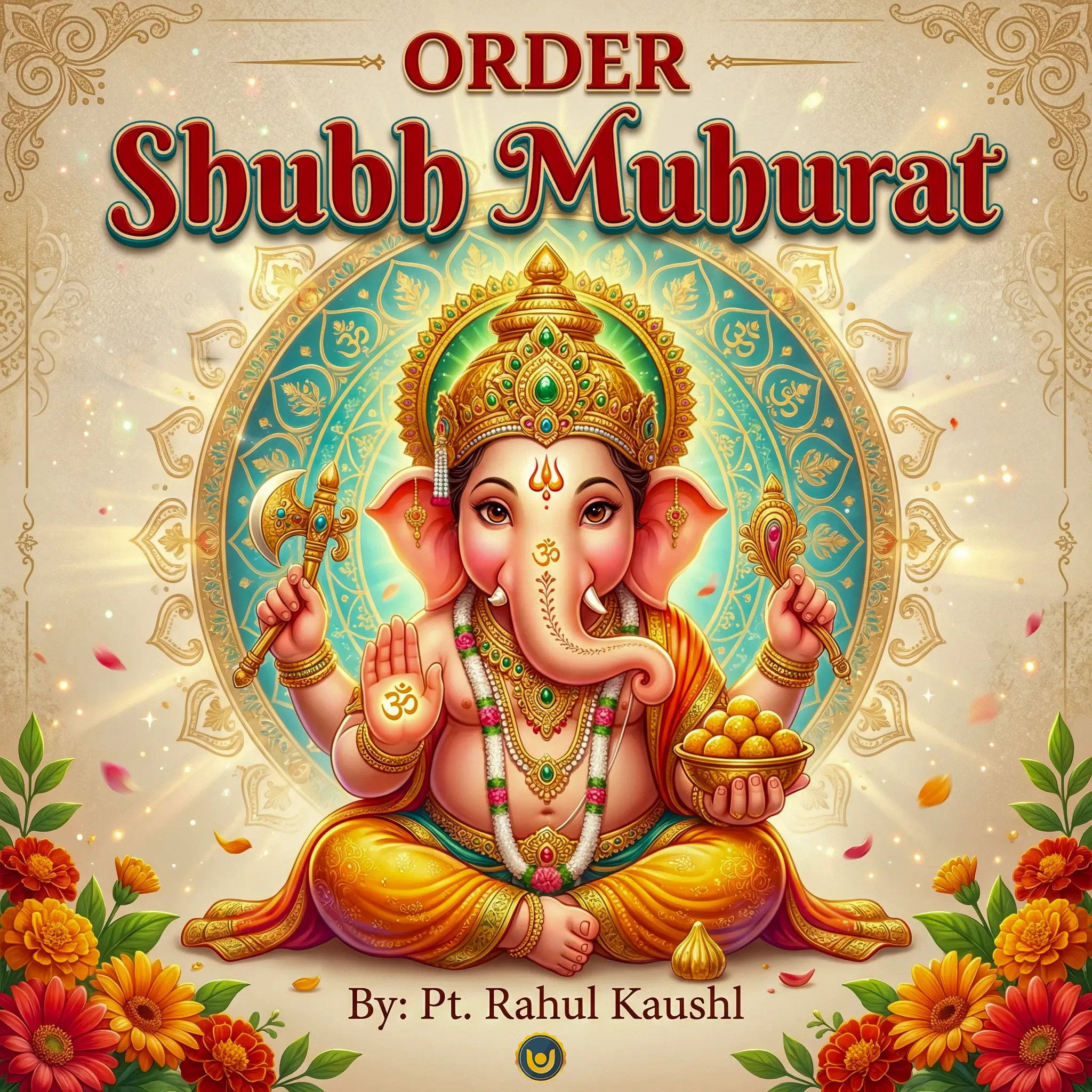
Shubh Muhurat Suggestion
What is Muhurata?
Muhurata is a unit of time in which planets and Nakshatras are aligned in a benefic position. A task performed in an Shubh Muhurat minimizes the obstacles and maximizes the chances of success & satisfaction.
What is the importance of Muhurata?
The custom of adhering Muhurata is older than the tales. Shastras say beginning/performing a specific task in a certain Muhurata yields the desired outcomes.
When any work is commenced in an auspicious time, obstacles are removed, and desired results are obtained. Conversely, if any work is commenced in an inauspicious time, there are obstacles, the work is spoiled, and sometimes the work is not done at all.
Is Muhurata always needed?
There is a particular Muhurata for doing small to bigger tasks. In aeon, people used to consider Muhurata for every small task. However, for important works or ceremonies like beginning construction, buying property, buying a vehicle, travelling, marriage, naming ceremony of the child, and opening a new shop/factory/office, etc., Muhurata must be adhered to.
Why? Because these are some of the events that happen occasionally, but make a lasting difference, for which it becomes inevitable to perform them in auspicious Muhurata only.
Two Types of Muhurata:
Muhurata is of two types:
- Common Muhurata: Navratri, Dushehra, Diwali, New Year, Basant Panchmi, Akshaya Tritiya, Choghadiya, etc. These Muhuratas are equally beneficial for everyone.
- Special Muhurata: Additionally, a Muhurata calculated as per the Lagna and strength of the moon is called special Muhurata. Moreover, these Muhuratas are different for each person and the nature of the task.
Shubh Muhurata
Following are some most common Muhuratas people look for:
- Shubh Muhurata for Marriage
- Shubh Muhurata for Namkaran
- Shubh Muhurat for Partnership
- Shubh Muhurata for starting a business
- Shubh Muhurata for purchasing machinery
- Shubh Muhurata for buying property
- Shubh Muhurata for selling property
- Shubh Muhurata for buying vehicle
- Shubh Muhurata for investing
- Shubh Muhurata for admission
- Shubh Muhurata for going for an interview
- Shubh Muhurat for meeting clients
- Shubh Muhurata for hiring
- Shubh Muhurata for applying visa
- Shubh Muhurata for travelling
- Shubh Muhurata for Griha Pravesh
- Shubh Muhurata for commencing construction
- Shubh Muhurat for filing legal case
- Shubh Muhurata for operation or starting a medicine
How to Calculate Muhurata?
As per Hindu Panchang, one day is about 24 hours; consequently, approximately 30 different Muhuratas occur in 24 hours, each lasting about 48 minutes. In Panchang, annual auspicious and inauspicious Muhuratas are pre-calculated and, therefore, mentioned for easy reference.
30 Muhuratas in a Day:
| No | Muhurata | Class |
|---|---|---|
| 1 | Rudra | Inauspicious |
| 2 | Ahi | Inauspicious |
| 3 | Mitra | Auspicious |
| 4 | Pitra | Inauspicious |
| 5 | Vasu | Auspicious |
| 6 | Varaha | Auspicious |
| 7 | Vishwadeva | Auspicious |
| 8 | Vidhi | Auspicious (Not if fall on Monday & Friday) |
| 9 | Sutamukhi | Auspicious |
| 10 | Puruhut | Inauspicious |
| 11 | Vahini | Inauspicious |
| 12 | Naktanakara | Inauspicious |
| 13 | Varun | Auspicious |
| 14 | Aryaman | Auspicious (Not if fall on Sunday) |
| 15 | Bhaga | Inauspicious |
| 16 | Girish | Inauspicious |
| 17 | Ajapada | Inauspicious |
| 18 | Ahir Budhnya | Auspicious |
| 19 | Pushya | Auspicious |
| 20 | Ashwini | Auspicious |
| 21 | Yam | Inauspicious |
| 22 | Agni | Auspicious |
| 23 | Vidhartha | Auspicious |
| 24 | Kanda | Auspicious |
| 25 | Aditi | Auspicious |
| 26 | Jeev/Amrit | Highly Auspicious |
| 27 | Vishnu | Auspicious |
| 28 | Dyumadgadyuti | Auspicious |
| 29 | Brahma | Highly Auspicious |
| 30 | Samudram | Auspicious |
Muhurata is a space calculation, and certain parameters are considered while calculating a Muhurata, such as: Tithi, Nakshatra, Vaar, Karan, Yog, Planetary Placement, Malmas, Adhik Mas, Jupiter & Venus combustion, Bhadra, Rahu Kala, Strength of the Moon and most importantly an Auspicious Lagna. Let’s understand them in detail.
Tithi (Date): - The importance of Tithi in Nakshatra calculation is 1%.
In Nakshatra calculation, Panchang considers a day beginning from the Sunrise and, consequently, ending on the Sunrise of the next day. Tithi is also of two types:
- क्षय तिथि - starts after the sunrise but finishes before the sunrise of the next day.
- वृद्धि तिथि - starts before the sunrise but finishes after the sunrise of the next day.
However, both the Kshaya and Vridhi Tithis are inauspicious.
As per Panchang, there are 30 dates (Tithis) in a month; moreover, they are divided into 15-15 days of Shukla Paksha and Krishna Paksha.
| No | Dates in Krishna Paksha | Dates in Shukla Paksha |
|---|---|---|
| 1 | Pratipada | Pratipada |
| 2 | Dvitiya | Dvitiya |
| 3 | Tritiya | Tritiya |
| 4 | Chaturdashi | Chaturdashi |
| 5 | Panchmi | Panchmi |
| 6 | Shashti | Shashti |
| 7 | Saptami | Saptami |
| 8 | Ashtami | Ashtami |
| 9 | Navami | Navami |
| 10 | Dashmi | Dashmi |
| 11 | Ekadashi | Ekadashi |
| 12 | Dvadashi | Dvadashi |
| 13 | Trayodashi | Trayodashi |
| 14 | Chaturdashi | Chaturdashi |
| 15 | Amavasya | Purnima |
Nakshatra (Constellation): The importance of Vaar in Nakshatra calculation is 4%.
Nakshatra is a group of certain stars in the sky. There are 27 Nakshatras, but one additional Nakshatra also, called the Abhijit Nakshatra, which rarely occurs. 27 Nakshatras are ruled by 9 planets. Nakshatras ruled by good planets are auspicious; however, Nakshatras ruled by evil planets are inauspicious.
| Ketu | Magha | Ashwini | Moola |
| Venus | Purva Ashadha | Purva Phalguni | Bharani |
| Sun | Kritiika | Uttara Ashada | Uttar Phalguni |
| Moon | Rohini | Hasta | Shravana |
| Mars | Mrigashira | Dhanishta | Chitra |
| Rahu | Swati | Ardra | Shatbhisha |
| Jupiter | Purva Bhadrapada | Vishakha | Punarvasu |
| Saturn | Pushya | Anuradha | Uttar Bhadrapada |
| Mercury | Ashlesha | Jyeshta | Revati |
Vaar (Day): The importance of Vaar in Nakshatra calculation is 8%.
Specifically, Vaar refers to the weekday categorized as per their nature:
| Auspicious Days | Monday, Wednesday & Thursday | Good for every noble work. |
| Soft Days | Friday | Good for love, meeting friends & relatives, emotional concerns, and shopping. |
| Cruel Days | Sunday, Tuesday & Saturday | Good for only evil deeds like court case, fight or dispute. |
Karana (Day): The importance of Karana in the Nakshatra calculation is 16%.
Moreover, a Tithi (date) is divided into two parts. Each part of a Tithi is called a Karna. According to the Panchang, there are 11 Karnas: specifically, 4 fixed and 7 movables.
| No | Karna | Nature | Class |
| 1 | Knishtughan | Fixed | Inauspicious |
| 2 | Bava | Movable | Auspicious |
| 3 | Baalav | Movable | Auspicious |
| 4 | Kaulav | Movable | Auspicious |
| 5 | Gar | Movable | Auspicious |
| 6 | Tetil | Movable | Auspicious |
| 7 | Vanij | Movable | Auspicious |
| 8 | Vishti (Bhadra) | Movable | Auspicious |
| 9 | Shakuni | Fixed | Inauspicious |
| 10 | Nag | Fixed | Inauspicious |
| 11 | Chatuspad | Fixed | Inauspicious |
Yog: The importance of Yog in Nakshatra calculation is 32%.
Yoga is axiomatic because it is a combination of other measures like sun, moon, Nakshatra, Tithi, etc. In Panchang, 27 Yogas are mentioned:
| No | Yoga | Class |
|---|---|---|
| 1 | Vishkumbha | Inauspicious |
| 2 | Preeti | Auspicious |
| 3 | Ayushman | Auspicious |
| 4 | Saubhagya | Auspicious |
| 5 | Shobhan | Auspicious |
| 6 | Atigand | Inauspicious |
| 7 | Sukarma | Auspicious |
| 8 | Dhriti | Auspicious |
| 9 | Shool | Inauspicious |
| 10 | Gand | Inauspicious |
| 11 | Vriddhi | Auspicious |
| 12 | Dhruv | Auspicious |
| 13 | Vyaghata | Inauspicious |
| 14 | Harshan | Auspicious |
| 15 | Vajra | Inauspicious |
| 16 | Siddhi | Auspicious |
| 17 | Vyatipata | Inauspicious |
| 18 | Variyan | Auspicious |
| 19 | Parigh | Inauspicious |
| 20 | Shiv | Auspicious |
| 21 | Siddh | Auspicious |
| 22 | Sadhya | Auspicious |
| 23 | Shubh | Auspicious |
| 24 | Shukla | Auspicious |
| 25 | Brahma | Auspicious |
| 26 | Ayendra | Auspicious |
| 27 | Vaidhriti | Inauspicious |
Tara: The importance of Tara in Nakshatra calculation is 60%.
Additionally, Nakshatra is divided into nine parts termed as Taras.The formula to calculate Tara is
- To begin with, take moon Nakshatra of your birth time.
- Therefore, take the moon Nakshatra of the day on which the Muhurata is required.
- Count the Nakshatra number from your birth Nakshatra to the respective day’s Nakshatra. Then, divide the number by 9 — the yielded number will be your Tara.
| Tara Number | Tara Name | Class |
|---|---|---|
| 1 | Janma | Auspicious |
| 2 | Sampata | Auspicious |
| 3 | Vipata | Inauspicious |
| 4 | Kshema | Auspicious |
| 5 | Pratyari | Inauspicious |
| 6 | Sadhaka | Auspicious |
| 7 | Vadha | Inauspicious |
| 8 | Mitra | Auspicious |
| 9 | Atimitra | Auspicious |
You can also get an shubh Muhurat personally calculated by Pt. Rahul Kaushl.
Note:- Therefore, we only give 3 best muhuratas for every report. Additionally, the report will be sent to your mail. Do check your Mail Inbox and Junk regularly, and it’s better to add our email "report@pandit.com" in your address book
Original: $10.34
-65%$10.34
$3.62More Images


Shubh Muhurat Suggestion
What is Muhurata?
Muhurata is a unit of time in which planets and Nakshatras are aligned in a benefic position. A task performed in an Shubh Muhurat minimizes the obstacles and maximizes the chances of success & satisfaction.
What is the importance of Muhurata?
The custom of adhering Muhurata is older than the tales. Shastras say beginning/performing a specific task in a certain Muhurata yields the desired outcomes.
When any work is commenced in an auspicious time, obstacles are removed, and desired results are obtained. Conversely, if any work is commenced in an inauspicious time, there are obstacles, the work is spoiled, and sometimes the work is not done at all.
Is Muhurata always needed?
There is a particular Muhurata for doing small to bigger tasks. In aeon, people used to consider Muhurata for every small task. However, for important works or ceremonies like beginning construction, buying property, buying a vehicle, travelling, marriage, naming ceremony of the child, and opening a new shop/factory/office, etc., Muhurata must be adhered to.
Why? Because these are some of the events that happen occasionally, but make a lasting difference, for which it becomes inevitable to perform them in auspicious Muhurata only.
Two Types of Muhurata:
Muhurata is of two types:
- Common Muhurata: Navratri, Dushehra, Diwali, New Year, Basant Panchmi, Akshaya Tritiya, Choghadiya, etc. These Muhuratas are equally beneficial for everyone.
- Special Muhurata: Additionally, a Muhurata calculated as per the Lagna and strength of the moon is called special Muhurata. Moreover, these Muhuratas are different for each person and the nature of the task.
Shubh Muhurata
Following are some most common Muhuratas people look for:
- Shubh Muhurata for Marriage
- Shubh Muhurata for Namkaran
- Shubh Muhurat for Partnership
- Shubh Muhurata for starting a business
- Shubh Muhurata for purchasing machinery
- Shubh Muhurata for buying property
- Shubh Muhurata for selling property
- Shubh Muhurata for buying vehicle
- Shubh Muhurata for investing
- Shubh Muhurata for admission
- Shubh Muhurata for going for an interview
- Shubh Muhurat for meeting clients
- Shubh Muhurata for hiring
- Shubh Muhurata for applying visa
- Shubh Muhurata for travelling
- Shubh Muhurata for Griha Pravesh
- Shubh Muhurata for commencing construction
- Shubh Muhurat for filing legal case
- Shubh Muhurata for operation or starting a medicine
How to Calculate Muhurata?
As per Hindu Panchang, one day is about 24 hours; consequently, approximately 30 different Muhuratas occur in 24 hours, each lasting about 48 minutes. In Panchang, annual auspicious and inauspicious Muhuratas are pre-calculated and, therefore, mentioned for easy reference.
30 Muhuratas in a Day:
| No | Muhurata | Class |
|---|---|---|
| 1 | Rudra | Inauspicious |
| 2 | Ahi | Inauspicious |
| 3 | Mitra | Auspicious |
| 4 | Pitra | Inauspicious |
| 5 | Vasu | Auspicious |
| 6 | Varaha | Auspicious |
| 7 | Vishwadeva | Auspicious |
| 8 | Vidhi | Auspicious (Not if fall on Monday & Friday) |
| 9 | Sutamukhi | Auspicious |
| 10 | Puruhut | Inauspicious |
| 11 | Vahini | Inauspicious |
| 12 | Naktanakara | Inauspicious |
| 13 | Varun | Auspicious |
| 14 | Aryaman | Auspicious (Not if fall on Sunday) |
| 15 | Bhaga | Inauspicious |
| 16 | Girish | Inauspicious |
| 17 | Ajapada | Inauspicious |
| 18 | Ahir Budhnya | Auspicious |
| 19 | Pushya | Auspicious |
| 20 | Ashwini | Auspicious |
| 21 | Yam | Inauspicious |
| 22 | Agni | Auspicious |
| 23 | Vidhartha | Auspicious |
| 24 | Kanda | Auspicious |
| 25 | Aditi | Auspicious |
| 26 | Jeev/Amrit | Highly Auspicious |
| 27 | Vishnu | Auspicious |
| 28 | Dyumadgadyuti | Auspicious |
| 29 | Brahma | Highly Auspicious |
| 30 | Samudram | Auspicious |
Muhurata is a space calculation, and certain parameters are considered while calculating a Muhurata, such as: Tithi, Nakshatra, Vaar, Karan, Yog, Planetary Placement, Malmas, Adhik Mas, Jupiter & Venus combustion, Bhadra, Rahu Kala, Strength of the Moon and most importantly an Auspicious Lagna. Let’s understand them in detail.
Tithi (Date): - The importance of Tithi in Nakshatra calculation is 1%.
In Nakshatra calculation, Panchang considers a day beginning from the Sunrise and, consequently, ending on the Sunrise of the next day. Tithi is also of two types:
- क्षय तिथि - starts after the sunrise but finishes before the sunrise of the next day.
- वृद्धि तिथि - starts before the sunrise but finishes after the sunrise of the next day.
However, both the Kshaya and Vridhi Tithis are inauspicious.
As per Panchang, there are 30 dates (Tithis) in a month; moreover, they are divided into 15-15 days of Shukla Paksha and Krishna Paksha.
| No | Dates in Krishna Paksha | Dates in Shukla Paksha |
|---|---|---|
| 1 | Pratipada | Pratipada |
| 2 | Dvitiya | Dvitiya |
| 3 | Tritiya | Tritiya |
| 4 | Chaturdashi | Chaturdashi |
| 5 | Panchmi | Panchmi |
| 6 | Shashti | Shashti |
| 7 | Saptami | Saptami |
| 8 | Ashtami | Ashtami |
| 9 | Navami | Navami |
| 10 | Dashmi | Dashmi |
| 11 | Ekadashi | Ekadashi |
| 12 | Dvadashi | Dvadashi |
| 13 | Trayodashi | Trayodashi |
| 14 | Chaturdashi | Chaturdashi |
| 15 | Amavasya | Purnima |
Nakshatra (Constellation): The importance of Vaar in Nakshatra calculation is 4%.
Nakshatra is a group of certain stars in the sky. There are 27 Nakshatras, but one additional Nakshatra also, called the Abhijit Nakshatra, which rarely occurs. 27 Nakshatras are ruled by 9 planets. Nakshatras ruled by good planets are auspicious; however, Nakshatras ruled by evil planets are inauspicious.
| Ketu | Magha | Ashwini | Moola |
| Venus | Purva Ashadha | Purva Phalguni | Bharani |
| Sun | Kritiika | Uttara Ashada | Uttar Phalguni |
| Moon | Rohini | Hasta | Shravana |
| Mars | Mrigashira | Dhanishta | Chitra |
| Rahu | Swati | Ardra | Shatbhisha |
| Jupiter | Purva Bhadrapada | Vishakha | Punarvasu |
| Saturn | Pushya | Anuradha | Uttar Bhadrapada |
| Mercury | Ashlesha | Jyeshta | Revati |
Vaar (Day): The importance of Vaar in Nakshatra calculation is 8%.
Specifically, Vaar refers to the weekday categorized as per their nature:
| Auspicious Days | Monday, Wednesday & Thursday | Good for every noble work. |
| Soft Days | Friday | Good for love, meeting friends & relatives, emotional concerns, and shopping. |
| Cruel Days | Sunday, Tuesday & Saturday | Good for only evil deeds like court case, fight or dispute. |
Karana (Day): The importance of Karana in the Nakshatra calculation is 16%.
Moreover, a Tithi (date) is divided into two parts. Each part of a Tithi is called a Karna. According to the Panchang, there are 11 Karnas: specifically, 4 fixed and 7 movables.
| No | Karna | Nature | Class |
| 1 | Knishtughan | Fixed | Inauspicious |
| 2 | Bava | Movable | Auspicious |
| 3 | Baalav | Movable | Auspicious |
| 4 | Kaulav | Movable | Auspicious |
| 5 | Gar | Movable | Auspicious |
| 6 | Tetil | Movable | Auspicious |
| 7 | Vanij | Movable | Auspicious |
| 8 | Vishti (Bhadra) | Movable | Auspicious |
| 9 | Shakuni | Fixed | Inauspicious |
| 10 | Nag | Fixed | Inauspicious |
| 11 | Chatuspad | Fixed | Inauspicious |
Yog: The importance of Yog in Nakshatra calculation is 32%.
Yoga is axiomatic because it is a combination of other measures like sun, moon, Nakshatra, Tithi, etc. In Panchang, 27 Yogas are mentioned:
| No | Yoga | Class |
|---|---|---|
| 1 | Vishkumbha | Inauspicious |
| 2 | Preeti | Auspicious |
| 3 | Ayushman | Auspicious |
| 4 | Saubhagya | Auspicious |
| 5 | Shobhan | Auspicious |
| 6 | Atigand | Inauspicious |
| 7 | Sukarma | Auspicious |
| 8 | Dhriti | Auspicious |
| 9 | Shool | Inauspicious |
| 10 | Gand | Inauspicious |
| 11 | Vriddhi | Auspicious |
| 12 | Dhruv | Auspicious |
| 13 | Vyaghata | Inauspicious |
| 14 | Harshan | Auspicious |
| 15 | Vajra | Inauspicious |
| 16 | Siddhi | Auspicious |
| 17 | Vyatipata | Inauspicious |
| 18 | Variyan | Auspicious |
| 19 | Parigh | Inauspicious |
| 20 | Shiv | Auspicious |
| 21 | Siddh | Auspicious |
| 22 | Sadhya | Auspicious |
| 23 | Shubh | Auspicious |
| 24 | Shukla | Auspicious |
| 25 | Brahma | Auspicious |
| 26 | Ayendra | Auspicious |
| 27 | Vaidhriti | Inauspicious |
Tara: The importance of Tara in Nakshatra calculation is 60%.
Additionally, Nakshatra is divided into nine parts termed as Taras.The formula to calculate Tara is
- To begin with, take moon Nakshatra of your birth time.
- Therefore, take the moon Nakshatra of the day on which the Muhurata is required.
- Count the Nakshatra number from your birth Nakshatra to the respective day’s Nakshatra. Then, divide the number by 9 — the yielded number will be your Tara.
| Tara Number | Tara Name | Class |
|---|---|---|
| 1 | Janma | Auspicious |
| 2 | Sampata | Auspicious |
| 3 | Vipata | Inauspicious |
| 4 | Kshema | Auspicious |
| 5 | Pratyari | Inauspicious |
| 6 | Sadhaka | Auspicious |
| 7 | Vadha | Inauspicious |
| 8 | Mitra | Auspicious |
| 9 | Atimitra | Auspicious |
You can also get an shubh Muhurat personally calculated by Pt. Rahul Kaushl.
Note:- Therefore, we only give 3 best muhuratas for every report. Additionally, the report will be sent to your mail. Do check your Mail Inbox and Junk regularly, and it’s better to add our email "report@pandit.com" in your address book
Product Information
Product Information
Shipping & Returns
Shipping & Returns
Description
What is Muhurata?
Muhurata is a unit of time in which planets and Nakshatras are aligned in a benefic position. A task performed in an Shubh Muhurat minimizes the obstacles and maximizes the chances of success & satisfaction.
What is the importance of Muhurata?
The custom of adhering Muhurata is older than the tales. Shastras say beginning/performing a specific task in a certain Muhurata yields the desired outcomes.
When any work is commenced in an auspicious time, obstacles are removed, and desired results are obtained. Conversely, if any work is commenced in an inauspicious time, there are obstacles, the work is spoiled, and sometimes the work is not done at all.
Is Muhurata always needed?
There is a particular Muhurata for doing small to bigger tasks. In aeon, people used to consider Muhurata for every small task. However, for important works or ceremonies like beginning construction, buying property, buying a vehicle, travelling, marriage, naming ceremony of the child, and opening a new shop/factory/office, etc., Muhurata must be adhered to.
Why? Because these are some of the events that happen occasionally, but make a lasting difference, for which it becomes inevitable to perform them in auspicious Muhurata only.
Two Types of Muhurata:
Muhurata is of two types:
- Common Muhurata: Navratri, Dushehra, Diwali, New Year, Basant Panchmi, Akshaya Tritiya, Choghadiya, etc. These Muhuratas are equally beneficial for everyone.
- Special Muhurata: Additionally, a Muhurata calculated as per the Lagna and strength of the moon is called special Muhurata. Moreover, these Muhuratas are different for each person and the nature of the task.
Shubh Muhurata
Following are some most common Muhuratas people look for:
- Shubh Muhurata for Marriage
- Shubh Muhurata for Namkaran
- Shubh Muhurat for Partnership
- Shubh Muhurata for starting a business
- Shubh Muhurata for purchasing machinery
- Shubh Muhurata for buying property
- Shubh Muhurata for selling property
- Shubh Muhurata for buying vehicle
- Shubh Muhurata for investing
- Shubh Muhurata for admission
- Shubh Muhurata for going for an interview
- Shubh Muhurat for meeting clients
- Shubh Muhurata for hiring
- Shubh Muhurata for applying visa
- Shubh Muhurata for travelling
- Shubh Muhurata for Griha Pravesh
- Shubh Muhurata for commencing construction
- Shubh Muhurat for filing legal case
- Shubh Muhurata for operation or starting a medicine
How to Calculate Muhurata?
As per Hindu Panchang, one day is about 24 hours; consequently, approximately 30 different Muhuratas occur in 24 hours, each lasting about 48 minutes. In Panchang, annual auspicious and inauspicious Muhuratas are pre-calculated and, therefore, mentioned for easy reference.
30 Muhuratas in a Day:
| No | Muhurata | Class |
|---|---|---|
| 1 | Rudra | Inauspicious |
| 2 | Ahi | Inauspicious |
| 3 | Mitra | Auspicious |
| 4 | Pitra | Inauspicious |
| 5 | Vasu | Auspicious |
| 6 | Varaha | Auspicious |
| 7 | Vishwadeva | Auspicious |
| 8 | Vidhi | Auspicious (Not if fall on Monday & Friday) |
| 9 | Sutamukhi | Auspicious |
| 10 | Puruhut | Inauspicious |
| 11 | Vahini | Inauspicious |
| 12 | Naktanakara | Inauspicious |
| 13 | Varun | Auspicious |
| 14 | Aryaman | Auspicious (Not if fall on Sunday) |
| 15 | Bhaga | Inauspicious |
| 16 | Girish | Inauspicious |
| 17 | Ajapada | Inauspicious |
| 18 | Ahir Budhnya | Auspicious |
| 19 | Pushya | Auspicious |
| 20 | Ashwini | Auspicious |
| 21 | Yam | Inauspicious |
| 22 | Agni | Auspicious |
| 23 | Vidhartha | Auspicious |
| 24 | Kanda | Auspicious |
| 25 | Aditi | Auspicious |
| 26 | Jeev/Amrit | Highly Auspicious |
| 27 | Vishnu | Auspicious |
| 28 | Dyumadgadyuti | Auspicious |
| 29 | Brahma | Highly Auspicious |
| 30 | Samudram | Auspicious |
Muhurata is a space calculation, and certain parameters are considered while calculating a Muhurata, such as: Tithi, Nakshatra, Vaar, Karan, Yog, Planetary Placement, Malmas, Adhik Mas, Jupiter & Venus combustion, Bhadra, Rahu Kala, Strength of the Moon and most importantly an Auspicious Lagna. Let’s understand them in detail.
Tithi (Date): - The importance of Tithi in Nakshatra calculation is 1%.
In Nakshatra calculation, Panchang considers a day beginning from the Sunrise and, consequently, ending on the Sunrise of the next day. Tithi is also of two types:
- क्षय तिथि - starts after the sunrise but finishes before the sunrise of the next day.
- वृद्धि तिथि - starts before the sunrise but finishes after the sunrise of the next day.
However, both the Kshaya and Vridhi Tithis are inauspicious.
As per Panchang, there are 30 dates (Tithis) in a month; moreover, they are divided into 15-15 days of Shukla Paksha and Krishna Paksha.
| No | Dates in Krishna Paksha | Dates in Shukla Paksha |
|---|---|---|
| 1 | Pratipada | Pratipada |
| 2 | Dvitiya | Dvitiya |
| 3 | Tritiya | Tritiya |
| 4 | Chaturdashi | Chaturdashi |
| 5 | Panchmi | Panchmi |
| 6 | Shashti | Shashti |
| 7 | Saptami | Saptami |
| 8 | Ashtami | Ashtami |
| 9 | Navami | Navami |
| 10 | Dashmi | Dashmi |
| 11 | Ekadashi | Ekadashi |
| 12 | Dvadashi | Dvadashi |
| 13 | Trayodashi | Trayodashi |
| 14 | Chaturdashi | Chaturdashi |
| 15 | Amavasya | Purnima |
Nakshatra (Constellation): The importance of Vaar in Nakshatra calculation is 4%.
Nakshatra is a group of certain stars in the sky. There are 27 Nakshatras, but one additional Nakshatra also, called the Abhijit Nakshatra, which rarely occurs. 27 Nakshatras are ruled by 9 planets. Nakshatras ruled by good planets are auspicious; however, Nakshatras ruled by evil planets are inauspicious.
| Ketu | Magha | Ashwini | Moola |
| Venus | Purva Ashadha | Purva Phalguni | Bharani |
| Sun | Kritiika | Uttara Ashada | Uttar Phalguni |
| Moon | Rohini | Hasta | Shravana |
| Mars | Mrigashira | Dhanishta | Chitra |
| Rahu | Swati | Ardra | Shatbhisha |
| Jupiter | Purva Bhadrapada | Vishakha | Punarvasu |
| Saturn | Pushya | Anuradha | Uttar Bhadrapada |
| Mercury | Ashlesha | Jyeshta | Revati |
Vaar (Day): The importance of Vaar in Nakshatra calculation is 8%.
Specifically, Vaar refers to the weekday categorized as per their nature:
| Auspicious Days | Monday, Wednesday & Thursday | Good for every noble work. |
| Soft Days | Friday | Good for love, meeting friends & relatives, emotional concerns, and shopping. |
| Cruel Days | Sunday, Tuesday & Saturday | Good for only evil deeds like court case, fight or dispute. |
Karana (Day): The importance of Karana in the Nakshatra calculation is 16%.
Moreover, a Tithi (date) is divided into two parts. Each part of a Tithi is called a Karna. According to the Panchang, there are 11 Karnas: specifically, 4 fixed and 7 movables.
| No | Karna | Nature | Class |
| 1 | Knishtughan | Fixed | Inauspicious |
| 2 | Bava | Movable | Auspicious |
| 3 | Baalav | Movable | Auspicious |
| 4 | Kaulav | Movable | Auspicious |
| 5 | Gar | Movable | Auspicious |
| 6 | Tetil | Movable | Auspicious |
| 7 | Vanij | Movable | Auspicious |
| 8 | Vishti (Bhadra) | Movable | Auspicious |
| 9 | Shakuni | Fixed | Inauspicious |
| 10 | Nag | Fixed | Inauspicious |
| 11 | Chatuspad | Fixed | Inauspicious |
Yog: The importance of Yog in Nakshatra calculation is 32%.
Yoga is axiomatic because it is a combination of other measures like sun, moon, Nakshatra, Tithi, etc. In Panchang, 27 Yogas are mentioned:
| No | Yoga | Class |
|---|---|---|
| 1 | Vishkumbha | Inauspicious |
| 2 | Preeti | Auspicious |
| 3 | Ayushman | Auspicious |
| 4 | Saubhagya | Auspicious |
| 5 | Shobhan | Auspicious |
| 6 | Atigand | Inauspicious |
| 7 | Sukarma | Auspicious |
| 8 | Dhriti | Auspicious |
| 9 | Shool | Inauspicious |
| 10 | Gand | Inauspicious |
| 11 | Vriddhi | Auspicious |
| 12 | Dhruv | Auspicious |
| 13 | Vyaghata | Inauspicious |
| 14 | Harshan | Auspicious |
| 15 | Vajra | Inauspicious |
| 16 | Siddhi | Auspicious |
| 17 | Vyatipata | Inauspicious |
| 18 | Variyan | Auspicious |
| 19 | Parigh | Inauspicious |
| 20 | Shiv | Auspicious |
| 21 | Siddh | Auspicious |
| 22 | Sadhya | Auspicious |
| 23 | Shubh | Auspicious |
| 24 | Shukla | Auspicious |
| 25 | Brahma | Auspicious |
| 26 | Ayendra | Auspicious |
| 27 | Vaidhriti | Inauspicious |
Tara: The importance of Tara in Nakshatra calculation is 60%.
Additionally, Nakshatra is divided into nine parts termed as Taras.The formula to calculate Tara is
- To begin with, take moon Nakshatra of your birth time.
- Therefore, take the moon Nakshatra of the day on which the Muhurata is required.
- Count the Nakshatra number from your birth Nakshatra to the respective day’s Nakshatra. Then, divide the number by 9 — the yielded number will be your Tara.
| Tara Number | Tara Name | Class |
|---|---|---|
| 1 | Janma | Auspicious |
| 2 | Sampata | Auspicious |
| 3 | Vipata | Inauspicious |
| 4 | Kshema | Auspicious |
| 5 | Pratyari | Inauspicious |
| 6 | Sadhaka | Auspicious |
| 7 | Vadha | Inauspicious |
| 8 | Mitra | Auspicious |
| 9 | Atimitra | Auspicious |
You can also get an shubh Muhurat personally calculated by Pt. Rahul Kaushl.
Note:- Therefore, we only give 3 best muhuratas for every report. Additionally, the report will be sent to your mail. Do check your Mail Inbox and Junk regularly, and it’s better to add our email "report@pandit.com" in your address book